Category Archives: Real Estate

Solar Panels in Sacramento

I just read an interesting article that motivated me to convey some thoughts and experiences on solar panels.

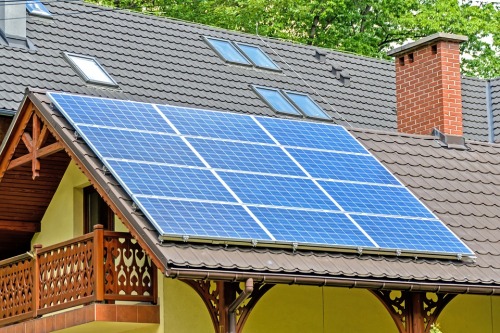
It’s exciting to see the progress solar power and panels have made in the last decade – more affordable and more efficient.  I visited a remote village in Northern, rural India where no power line reached… but to my surprise, they had a communal solar panel in the middle of the village to, yes … charge their cell phones.  Solar farms are popping up in open spaces – I saw a huge one recently on a drive to Las Vegas.  When I visit my home town of San Francisco and look out over a view, it seems more homes had solar panels than ones that do not.  I’ve sold new homes that now have solar panels as part of the purchase package – what home owner doesn’t love almost free energy!  And I’ve now interviewed three companies to hear their pitch for solar panels on my own home.
solar-panels-1477987_960_720


While I’m all for solar power, saving the planet, and money if possible, my experience was a little discouraging.  I hope that you might get a few tid-bits from my own journey.

It seems that purchasing panels is still not very popular, as the out-of-pocket expense out weigh the benefits/savings.  Some might argue, like buying a hybrid car, “You don’t buy it for the saving, rather for the planet.” There are also many incentives in California that go along with the purchase of solar panels.  The federal government gives tax credits (write-offs) for owners of solar panels.  And, there are a bunch of local incentives to look into if you are going to purchase panels.  Like a car, there are avenues and incentives to finance the purchase of solar panels too.  This attracted me, because it seemed that one could save money on power, then eventually own the panels.  However, I was also informed that the life of the panel’s efficiency is only about 20-25 years, which just so happens to be the life of the loan.  Take the time, look into the kick backs for your area, do the math and then make a decision.  Purchasing may be the right path for you?

Leasing the panels is another option where you pay a set amount (lower than your average monthly utility bill), but I found that a “power purchase agreement [PPA]” seems to be most popular route offered.  Leasing and the PPA are similar in that there’s little to no money out-of-pocket.  With the PPA, it’s as if you are agreeing to a fixed utility rate (lower than your average monthly utility bill) and allowing the company to use your roof to harvest solar power.  The company I spent the most time with asks for a 20 year agreement.

At the end of the day, while I love our planet and believe solar power and panels are a great move, I decided against it for now.  Here are the issues I came against:

  1. The numbers did not work for me on the purchase route, nor any other route.  Many told me ahead of time, “If you have SMUD (Sacramento Municipal Utility District) then it doesn’t make sense,” due to how inexpensive our power is.  With the PPA I would have save about 2 cents a month.  This does not give me any incentive to save energy either.  The PPA company gets all of the incentives in this scenario.
  2. My roof may need replacing in the next 5 or so years.  I would be charged about $500 extra to have the panels removed while the roof was replaced.  They would not budge on this or work it into the deal.  I did not want to bear this extra cost.
  3. Lastly, I hated the sales tactics.  The big push seems to be part reality and part fear base… “Energy cost will be going through the roof in the near future!!!!!  Sir, do you want to pay triple what you are paying now?”  Are rates going up?  Who’s to say?  Do you trust the guy selling panels?  Maybe, but I definitely do not like the fear-base sales technique.  Also, the sales person was extremely friendly and helpful, even when I said I was not sure… he kept saying, “Just keep moving forward, you can say ‘no’ at any time.”  When I finally said, “Not at this time,” he got really pushy and aggressive, trying to make me feel like the bad guy for backing out.  That actually helped me “break up.”  There are plenty of solar companies out there that offer great service and similar product.  Don’t feel bound to one.

Again, I have friends and associates that it’s worked great for, and I love the idea.  For me, it’s not the right time.  What experience have you had?  What am I missing here?  Surely my experience is not all-inclusive.

 solar in India Picture from my trip to India in 2015, with small solar panel on roof.

Enjoy,

Keith Klassen – Real Estate Broker

916.669.9030

Net Sheets: What Are The Cost of Selling a Property in Sacramento?

Whether you are selling retail, wholesale, or analyzing a flip project, the costs can sometimes be tricky to figure out.  It’s not just estimating the sales price and backing the loan amount out of the proceeds.  There are many fees involved that can sting a seller if unaware.  This is where experience and some simple tools come in handy.

the-net-1573366

For retail sales, your favorite title company can drum up an estimated cost sheet with your potential sales price.  Or, you can usually get the title company to give you a net sheet spreadsheet or a link to their website, which many of them have a seller’s and buyer’s net sheet program.  If you are an agent, doing it yourself can save time and help establish your expertise.  Remember to remind the seller that this is an estimate, however, the better you get at filling in the net sheet (and comping properties) the closer you will be to the exact net number.  I like to give a worst case scenario, then the client is happy when I negotiate a better deal.  The following are included in a typical net sheet:

  • CA Withholdings: If this is an investment property and you are not selling in a corporation and you are receiving a gain, the state of California withholds 3 1/3% of the sales price .  Ugh – no one likes to pay this and it’s a surprise to your clients at closing if they are unaware.
  • Purchase Price:  Again, if you don’t have an accepted offer/contract on the property, then this is an estimate based on your ability to know the market.  This is selling 101 for any agent – become good at valuing properties.
  •   Title Insurance / Escrow Fee / City and County Transfer Tax – All of these are part of the real estate purchase contract and can be negotiated as to who pays.  Currently in Sacramento, CA the custom is for the seller to pay for title fees, city and county transfer taxes.  The escrow fee is usually split 50/50 between the buyer and seller.  Title and Escrow fees are set and published yearly by the companies and tend to be competitively price so that there is not a huge price variation between one company to the next
    • City transfer taxes are calculated by multiplying the [potential] sales price by $2.75 and dividing by 1000.  I see this one split more often as the sale price rises.
    • County transfer taxes are calculated by multiplying the [potential] sales price by $1.10 and dividing by 1000.
  • Real Estate Commissions – usually split between listing and buyer’s agent, unless one agent handles both sides of the deal.  In Sacramento, commissions typically ranges between 5-6% depending on the experience, services provided, and what is negotiated
  • Loan amount, plus fees associated with payoff.
  • Natural Hazard Disclosure Report – 99% of the time, the seller pay for this.  The main company in town charges $99, but there are a few that charge less.
  • Pest Report – typically the buyer pays for this and their home inspection, unless the buyer has a VA loan, then the seller is required to purchase the pest report.  Also, this specialized company is mainly looking for termites, wood-boring beetles, and fungus that causes dry rot, not mice, rat, bats, and other pest.  Depending on the size of the house, you can get a report and inspection for $100-150.
  • Home Warranty – many buyers ask for the seller to provide a year home warranty.  Depending on the size of the house and item covered, typically they range between $350-500.
  • Other Costs and Credits:  Depending on what is negotiated, there can be other costs associated with closing the deal
    • Credit to buyer for closing costs – lenders typically allow up to 3% of the purchase priced to be credited to a buyer
    • After inspection and due diligence has been completed by the buyer, many times a request for repairs or credit is issued to the seller.  Is it nearly impossible to estimate or predict.
    • I some times charge a transaction coordination fee to pay for the file auditing ($350-400)
    • “Junk Fees” – There are about 4-8 escrow/title fees that fall under this category.  Doc. prep, courier, notary, drawing fee, etc. – think $250-500.  The net sheet I use through a title co. auto-fills these categories.

Here’s a sample net sheet:

SELLER’S NET SHEET


Seller: xxx Date: 6/28/2016
Address: SACRAMENTO, CA 95818 Est. Close Date: 6/28/2016
Prepared by: Keith Klassen, Klassen & Associates, 916.595.7900 Annual Taxes: $0.00


Estimated Sales Price: $645000.00 1st Loan Balance: $385000.00 Interest: $
Approx. Gross Equity: $260000.00 2nd Loan Balance: $0 Interest: $


CLOSING COSTS
CA Withholding (3 1/3% of sales price): $
County Transfer Tax: Paid by: Seller $709.50
City Transfer Tax: Paid by: Seller $1773.75
Title Insurance Premium (Owner’s Policy): Paid by: Seller $1815.00
Escrow Fees: Paid by: Both $712.50
Notary Fees: $150.00
EWC Drawing Fee: $0.00
Courier Fee (includes Federal Express): $40.00
Total Commission: 6.00% + $0 $38700.00
Transaction Coordination Fee: $350.00
First Loan Balance: $385000.00
        Interest on 1st Loan: $
        Prepayment Penalty: $
        Statement Fee: $30.00
        Reconveyance Fee: $45.00
Second Loan Balance: $0
        Interest on 2nd Loan: $
        Prepayment Penalty: $
        Statement Fee: $
        Reconveyance Fee: $
Recording Fees: $50.00
Natural Hazard Disclosure Report: $99.00
Pest Control Report: $125.00
Work Required for Pest Clearance: $
Home Warranty: $400.00
Tax Proration (if not paid to date of recording): $
Security Deposit(s): $
Total Estimated Costs to Seller: $429999.75


CREDITS TO SELLER
Tax Proration: $
Total Estimated Credits to Seller: $0


CASH TO SELLER
Estimated Sales Price: $645000.00
Plus Estimated Credits: $0
Less Estimated Costs: $429999.75
Estimated Sale Proceeds to Seller: $215000.25

Contact me if you’d like a complimentary value assessment done on your property, or to discuss the costs of selling in detail.

Enjoy,

Keith Klassen – Real Estate Broker

916.595.7900

Go back

Your message has been sent

Warning
Warning
Warning
Warning

Warning.


New Development in Curtis Park, Sacramento

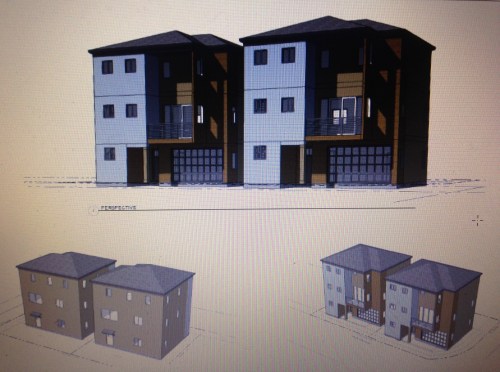
Yeah, I know what you were hoping for… an article about Curtis Park rail yard development.  Sorry not on this one – no chit chat about gas station wars and dollar stores.  Instead I’m inviting you to follow my own development experience as I build out two houses.  I hope to post some thoughts on the grueling process of splitting the lot / sub-dividing the parcel map.  Could be educational to some – loads of learning from my mistakes and experience.  I’ll be talking about the ins and outs of the scope of work, contracting, and architectural plans.  I’d love some feedback on the design elements when we get to the interior (yeah, everyone loves the interior – this is the sexy part).  Ultimately, these babies will be sold and I will be high-fiving my contractor and business partner.  Welcome to my housing development journey.house rendering

Brief background

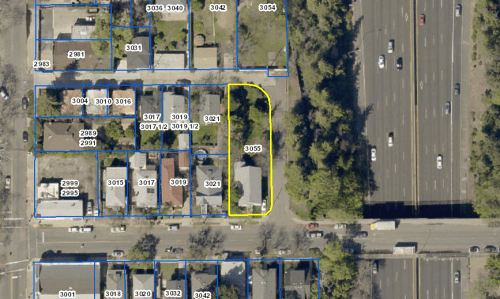
If you live in the area, you can check out the progress on 5th Ave., highway 99 frontage road, and Portola Alley.  I bought the house on 5th Ave. in 2008 and got the approval to subdivide the parcel later that year into 3 lots (original house sits on one, leaving 2 to build on).  Oh yes, it came with conditions.  I figured a budget of $25,000 to do curb and gutter work and maybe a few other things.  The City gave me a laundry list of improvements that got bid out between $100,000-125,000 – Yikes!  That killed the deal quickly.  So for the next six years I paid a portion of the property taxes and kept the weeds down.

5th ave overview pic

Fast forward to 2014… I saw a house sell for a decent price on the alley and knew it was time to build.  I got a contractor on board to share the project and do the work at cost (cutting the improvement work cost more than half).

Contact me if you want to discuss the boring, but essential ins and outs of engineering, special use permits, bonding, traffic plans, dealing with the City/fighting with the City (everyone has their war stories), utilities, etc.

We’ve begun improvement work – manholes, water main, sewer main, fire hydrant, and much more!  At the same time I’ve got an architect putting plans together and submitting to the Design Review Board.  In addition, I just got bids from five structural engineers and Title 24 bids.  Yay, getting serious.

lot clearing

Scrubbing the lot earlier 2016


“Man holes” – or should I be PC and call them “people holes” – might get a few weird looks?


Dropping the “hole” in the ground

Jimmy is the MAN!

Never thought I’d be so exited about a fire hydrant.

Water main beginnings.

Stay tuned for the next phase.

Cheers,

Signature2
Keith Klassen, Real Estate Broker / 916.595.7900

Appraisal Challenges and a Rebuttal with the VA

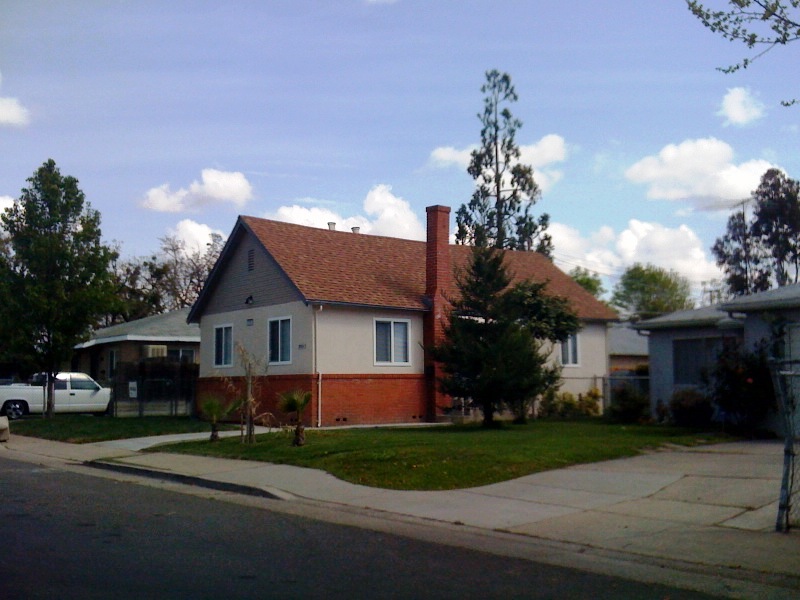
brick front doorThere is a lot of nervousness these days getting past the appraisal contingency, which is one of several things that a real estate contract usually hinges on when a purchaser requires a loan.  The contracts typically most susceptible are those from FHA and VA buyers, as these buyers many times can, and do offer more than the listing price, and the appraiser tends to scrutinize the property much more.  These loans require the least amount of down payment, with the VA requiring zero down.  A higher priced offer, over the list price, excites a seller as they see dollar signs, while a savvy agent knows that it must first get through the appraisal hurdle, or else the deal falls apart, or the seller has to lower the purchase price to the appraised value.   Many times an agent will meet the appraiser at the property in an attempt to educate, enlighten,  or justify the contract price using comparative listings and sold properties, as well as showing and detailing improvements, etc.  Some times this is helpful when done with tact, while other times it just annoys and ticks the appraiser off.  I typically just want to make sure that the appraiser is local and familiar with the area.  Homes that border neighborhoods and dividing lines can be tricky if the appraiser  is unaware of these boundaries, which a map does not show.

I am currently listing a home and in contract with a VA purchaser.  I felt that we priced the home fairly, in the sweet spot of the market.  We ended up getting two offers within a few weeks and settled in on one that was about $3000 under asking price.  All the inspections went well with no issues.  The appraiser called to let me know that the value would be coming in below the contract price, but wanted to give me an opportunity (known as “The Tide Water Process” only for VA loans) to submit my own findings and comparative sales.  I thought this was courteous, however, in our conversation he made it clear that he takes his job very seriously, and that he’s hardly ever wrong.  I interpreted that as, “go ahead and knock yourself out, but I’m not changing the value.”  I proceeded to send him the comps and a write-up as to the value of the home, including upgrades and details he may have missed.  Also I asked the question, “What other house can the buyer purchase in this area for the same price that is similar, where they can keep their kids in the same school” (which I knew was one of the buyer’s objectives).

End result:  The appraisal came in at the list price, $3000 over the contract price.  Go figure.  Seller is getting his money’s worth by hiring me.

Lesson learned:  Never give up.  Decent writing can go a long way.

Anyone else have experiences, good or bad with appraisers and appraisals?

Signature2


Keith Klassen, Broker

916.669.9030

Curtis Park Villiage (Sacramento) is Becoming a Reality

Image

After years of debate, soil treatment, neighborhood meetings, planning and develop the Curtis Park Village is now in full swing.  Twenty fourth Street is now  open to drive through, and unbuilt/pre-release homes have hit the market.  These stylish “cottage” homes (as they are referred to on the listings) have 3 bedrooms, 2.5 baths and range from 1790 to  2163 sq. ft., with options of a den, 4th bedroom, and one car or tandem garage.  They are listed from $564,990 to $609,990.

Image

One of my first thoughts was, “I wonder at what rate will that sell?  Are they going to go like hot cakes, or sit there with  price adjustments, etc.  Currently one has already gone pending, which is a good sign that they are a hot commodity.  It clear that first-comers will get choices of location, different options and amenities, and maybe will get in on the lowest price?  If the sell fast, those prices could go up!

Leave a comment or give me a call if interested and I can forward you the listings, or set up an appointment with the sellers for  more in depth information about the properties.

Truly,

Signature2


Keith Klassen, Broker

916.669.9030

Curtis Park Village Developement, Sacramento CA

As a Curtis Park resident, I’ve been following the most recent news on the Curtis Park Village development – here’s a recent piece that goes a little beyond our Viewpoint news.

http://www.sacbee.com/2013/05/05/5393743/petrovich-to-break-ground-on-long.html#mi_rss=Business

Moisture in Windows – Real Estate Sacramento

I have viewed and sold so many homes with dual pane windows that have failed.  The clear, or should I say unclear, indication is fogged up glass.  When you try to clean them, you quickly realize that there is moisture trapped in between the two panes, hence the window has failed.  Most inspectors will tell you that this does not diminish the effectiveness of the window, rather it just looks ugly.  And typically the remedy is replacing the glass or the window, which can be costly.

I ran across an article/ad regarding a newer technology, whereby they can de-moisturize and repair the window by just drilling to small holes in the corners.  Sound great if it actually is legitimate.

Has anyone out there utilized this technology?  And more importantly, does it work?  If so, this would be a great innovation to all those failed windows out there.

Enjoy,

Keith Klassen – Real Estate Broker

916.669.9030

KeithAKlassen@gmail.com

Is Green Really Worth the Green?

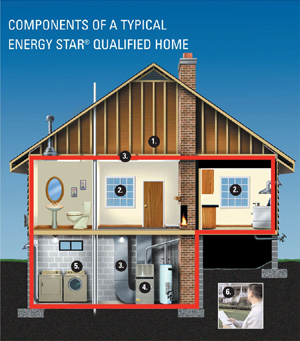
I caught a news piece this morning while at the gym.  The title was something like the one above.  The segment dealt with the question, Do energy efficient upgrades in a home make a difference in the sale price? Even with long-term energy savings, the short and resounding answer was, “NO.”  While it makes all the difference for the environment, the sale prices do not reflect the upgrades, whether it be solar, added insulation, dual flush toilets, Energy Star appliances, etc.  The target then got pinned on appraisers.  They bluntly said that it was the appraisers fault… [paraphrased] The appraisers are behind the curve on this one.  It’s the appraisers that have not gotten up to speed and are not giving correct value to these items.  When an appraiser sees a furnace, whether it’s energy efficient or not, they just see a furnace…”

Now I have friends that are appraisers that will read this and have an acid reflex response (a little sour taste in their mouth).  And I know theses appraisers do know the difference and can spot energy efficient systems.

I would love a response/rebuttal from the appraisal world.  Sound off.

And don’t kill/hate the messenger – I’m just reiterating what I saw on the news this morning.

Enjoy,

Keith Klassen – Real Estate Broker

916.669.9030

Great Remodeled Home for First Time Home Buyer in Sacramento CA

Welcome to 5761 Sampson Way.

This house has been renewed… all you will need to do is move in (and plant a garden in the humongous backyard).

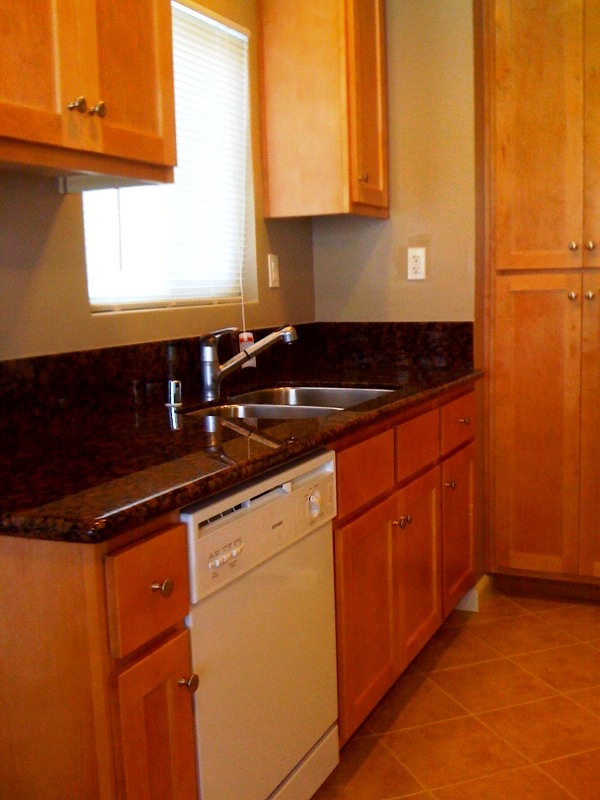
This home has been painted inside and out.  There are new doors (including security doors), new trim, new carpet and tile flooring.  The kitchen and bathrooms have been renovated and upgraded.  Check out the granite-slab counter tops and recessed lighting.

Just to mention a few more of the many upgrades – New central heat and air units, new landscaping, and newly pour concrete driveway (these costs and really add up).

You get all this for under $100,000.  That’s only about $775.00 per month in housing payments, which is less than you’d pay to rent this house!  We have more for sale like this.

Enjoy,

Keith Klassen – Real Estate Broker

916.669.9030

Faded Lady – The Guild in Oak Park, CA

The Guild Theater in Oak Park sends my thoughts back to a different era.  Oak Park has a fascinating history, that enjoyed a time of boom.  I love this building, the sign, and the brick work, yet I’ve not had the chance to go inside.

A friend of mine said that he when to a community gathering there about 6 or 7 years ago and water was leaking in from the ceiling.  Since then I believe that it has been restored.  I bet it was a wonderful place in it’s hay day, and still could be!

Old Soul Coffee house just moved in around the corner… signs of revitalization to come?

Enjoy,

Keith Klassen – Real Estate Broker

916.669.9030