
In past posts I’ve been adamantly against short sales due to all the hiccups involved. It is still true that a buyer needs patience, emotional disconnect, and a reality check, however, this year and the years to come might be much different.
Definition – Short Sale: When a home’s value is less than the money owed on the note/mortgage; This produces a scenario where the lender (one holding the note) is given the opportunity to approve or reject an offer to “forgive” the difference between the offer amount (and real estate fees) and the current amount owed on the loan.
To reiterate:
1) Patience – I closed a few short sales this year for buyers and the average wait to hear back from the bank on an approval was 2 months. I currently have an offer out there for a client on a short sale and we’ve waited about 4 months with no approval from the bank as of yet. The other agent keeps saying, “soon, soon… hopefully soon.”
2) Emotional Disconnect – This is a tough one… How does one make an offer on a home to live in and not become somewhat emotionally attached? It can be such an emotional roller coaster! Here’s the real picture – one can make an offer and finally hear back from the bank 2 months later, only to find out that the sale is not approved. Or, what is more common, there is no approval or call back, just the information that the home has gone to foreclosure.
3) Reality check – Much of the time short sales are listed in better condition and less expensive than REO/Bank Owned properties. Why is that? That’s what I ask my clients. Here is the answer – the agent is never sure what the bank will accept until an offer is received and submitted to the bank. So, in fact, the listing price is not completely accurate. And it stands to reason that an agent might just list it for lower in an attempt to garner offers.
Here’s the other side of the coin. I just took a short sale listing. The seller’s were very cooperative in filling out our short sale package. My staff and I were diligent to contact the bank. We did out own Broker Price Opinion (BPO) and due diligence. We priced it fairly and receive multiple offers. We picked the best one and submitted it to the bank with all of the information they requested (we knew this ahead of time). The offer was accepted and approved by the bank within ONE WEEK! I add the emphasis because my jaw also dropped with I heard this news. I can’t really take too much credit either, but I do know that the banks appreciate a complete package and agents that have their act together.
Bottom line, my faith is renewed for short sales. Also this coming year I believe that along with government incentive, laws being pasted, and banks getting more adept at dealing with short sales, this segment of the market will be huge.
My company is primed and geared to entertain many short sales in the year to come. Let me know if you have questions, or think you are a candidate for short selling your home.
Enjoy,
Keith Klassen
Real Estate Broker


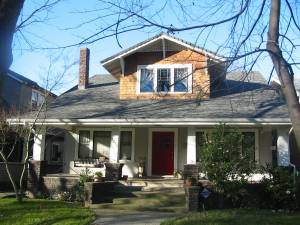 The word “porch” originally derived from “the Latin word porticus, or the Greek word portico, both of which signify the columned entry to a Classical temple”(Kahn 1). As history unfolded and the Middle Ages arrived, the porch came to represent a cathedral’s vestibule, “where worshippers could gather to socialize before and after the service”(Kahn 2). By Victorian times, the word “porch” became interchangeably used with the words “veranda,” “piazza,” “loggia,” and “portico,” each of which could connote individual meanings. From this period until the second half of the nineteenth century, “the word ‘porch’ itself most often described a small, enclosed vestibule or covered rear entrance” (Kahn 1). At this time, at the end of the nineteenth century, the word “porch” began to represent its present meaning. This meaning, in its American sense, generally refers to a “roofed, but incompletely walled living area”(McAlester 52) contiguously attached to the frame of a house. Generally, in America, this area would be found attached to the front of a house, offering a covered and shaded area for an array of uses and would be known as the American front porch.
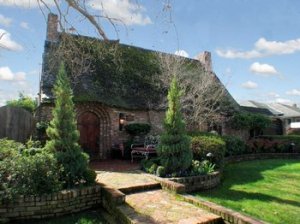 It was designed by Carr Jones, who mainly built in the San Francisco Bay Area, but designed a few homes in the Sacramento area as well. I was privileged enough to be able to let myself and my client in for a gander. Let me know if you want to take a peek too OR make an offer 🙂
 Sacramento Real Estate Reflections