Tag Archives: buyers

Common Investor Questions – Sacramento Real Estate

I get many questions from interested investors, so I thought I’d start posting them, as I’m sure others have the same questions.

Question/Inquiry from potential investor [May 27, 2009]

I heard that it is possible to achieve ~ $600 per month positive cash flow.  I would like to develop in my mind a profile of these types of properties so that I have a better idea of what I am looking for.

Here this is how I responded:

1) Cash flow will always depend on your finance situation.  For instance, the more money one is able to put down, the more cash flow (up to 100% cash flow).  My first question for you is, how much are you able to put down?  Or, what is your comfort level?  Or what is your budget?  Are you obtaining a loan?  Or would this be a cash transaction.

2) One way many investors are generating big rewards and high cash flows is to buy under valued properties that need value added.  This demands cash reserves to do put toward renovations.  Also, many times these types of properties do not qualify for a loan due to the poor condition of a property.

3) Also, $600 cash flow might be on the high side of expectations.  I have closed a few deals with investors that have received that kind of cash flow by putting 20% down and at times buying their rate down.  One recent scenario was a duplex that sold for $105K; 20% down; $10-12K in renovation; bought the rate down to about 5.25% – his total housing payment (including taxes and insurance) is about $700/mo. and he’s getting $1600 in rents.  This is a dream scenario, but as you can see it takes some reserves to pull it off.

4) A very common situation is a SFR in the $80-120K range that needs $2500 in repair, and would cash flow $300-$400/month.

What questions do you have?

Home Loan Market Loosing Up? Sacramento and Beyond

Mortgage rates and house prices are down – which sounds great for buyers and refinancers. But a series of mortgage industry underwriting and appraisal changes taking effect this month is throwing hurdles in the way of borrowers and loan officers.

Read onthis article is from the SF Chronicle on 4/19/09

Carr Jones Architecture in Sacramento

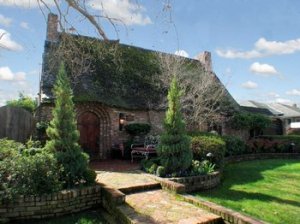
One of my client turned me on to a home just down the street from where I live, that is now on the market. Check out the virtual tour and pictures online. carr-jones1It was designed by Carr Jones, who mainly built in the San Francisco Bay Area, but designed a few homes in the Sacramento area as well. I was privileged enough to be able to let myself and my client in for a gander. Let me know if you want to take a peek too OR make an offer 🙂

While the home was not that impressive from the outside and only one bedroom in the main house, my breath was taken away upon entering. From what I’ve learn subsequently, Jones built pragmatic and practical homes. He used reclaimed timber and predominantly bricks. A local news paper article explains, “Many of his materials were scrounged. Used bricks were plentiful and cheap after the 1906 quake and he used recycled timbers and phone poles, refrigerator tubing for radiant heat, and disassembled old stoves to create built-in kitchen islands.”

Check out some other examples of his work in this article and this book.

Enjoy!

What to Expect When Buying a Bank Owned Property in Sacramento

images

While there are always better and worse case scenarios, I’m speaking from my experience. You can expect when buying a bank owned property:

1) A low price tag! Everyone loves this aspect of bank owned properties. Most banks are pricing their inventory at the low end of the market. I know one bank that specifically prices their homes 10% below the market. They want their inventory sold and off of the books as fast as possible. Their loss, your gain!

2) An As-Is sale. This is what most people don’t like… Banks will most always sell their properties as-is – I have not seen one that is not listed this way. This means that the bank will make no representations or warranties on the property, as they usually don’t know much about it, more than the address and the appraised value. Ninety percent of the time a bank will do no work or make no repairs on a property. Of the 10% of the time,

a. There may be a health or safety issue with the property that would cause potential future liability.

b. They may do a pest inspection and at times clear the Section 1 work (dry rot, termite damage, infestation, etc. that is present).

c. There may be some cosmetic work that is done before the home is listed or after it has not sold in several months, such as, re-painting or re-carpeting the house.

3) A one-sided transaction. In a buyer’s market, where the buyer should have all the negotiating strength, bank owned transactions do not behave as such.

a. It usually starts with a lack of responsiveness from the listing agent (not always). The agent, most of the time, is just a go-between and has little control or influence on the bank’s actions.

b. Many times because the property is priced so low, there may be multiple offers. Many times the final purchase price will be more than the asking price. Are you seeing how these transaction do not behave differently in this market? Most of the time a buyer is asking, “How much do you think the seller will come down on their price?”

c. If you get your offer accepted, expect the bank to send you an addendum, which is another contract that is written by their attorneys to safe guard their own interests.

i. Much of the time inspection time frames are shortened (say from the traditional 17 days to 7-10 days)

ii. There is always a Per Diem charge (any where between $50-$300) if the buyer does not close escrow on time as a fault of the buyer.

iii. Many times there is a “silent” contingency removal clause. This states that contingencies (loan, appraisal, inspection, etc.) will be removed automatically once they pass stated time frames in the contract. This is oppose to the normal signed contingency removal. Once contingencies are removed, whether formally or silently, the buyers deposit money is in jeopardy if the buyer backs out of the deal without good cause.

4) Some frustration. I have stories to tell…

While many things are out of my control, I’ve managed to successfully navigate bank owned properties on behalf of my clients. Give me a call to discuss your options.

Want to Buy a Foreclosure Property in Sacramento?

foreclosuresignIt seems as though many buyers that I’ve worked with lately have a misunderstanding or just a lack of understanding of foreclosure properties. This makes sense, as there is a lot of confusion surrounding the process.

Pre-foreclosure, otherwise known as a short sale …

Once a borrower misses 2 payments in a row the lender issues a notice of default (NOD) and the foreclosure process begins. The borrower has roughly 3 ½ months (maybe longer) before their home is foreclosed upon, unless the default amount is brought back to good standing.

Typically a home owner, that falls on hard times and cannot make their mortgage payment any longer will sell the home, if only to get out and break even. During time as these where homes values were inflated and now in decline, many owe more on their loan than their home is worth. A short sale is an option… that few find come to fruition.

A short sale is the scenario described above, where the loan(s) on a property exceed the amount of the home’s value. If the short sale is to close, the home owner will have to

1) Procure an offer during the 3 ½ month default period

2) The seller has to show hardship – e.g., loss of employment, divorce, medical condition, etc.

3) [The hardest piece of the puzzle] The lender will have to forgive the difference between the loan amount (plus real estate expenses) and the offering amount. This piece is why most short sales do not close. Prior to listing a short sale, most agents do not know if the lender will entertain a short sale, let along be willing to take a huge loss on the property.

4) [The second most difficult piece of the puzzle] The buyer will have to be very, very, very patient while they see other, potentially better deals pop up all around them. Lenders usually take a long time to respond. I’ve heard claims of short sales closing in 30 days – since I believe in miracles, I believe it. But from my own experience and the other agents I’ve surveyed the process is usually in the realistic range of 2 – 4 months. AND, many times a potential buyer waits around 2 month or longer, only to be denied by the bank, or to see the house go into foreclosure.  I love the marketing remarks on one short sale listing that read,”If you do not like disappointment and let-down, or are at all  impatient, then this home is not for you.”

I’ve had many potential clients call and say, “I’m looking to buy a foreclosure.” I think what they are really saying is, “I want a good deal and I heard on the news [or from a friend] that there are some great foreclosure buys out there!” And they are right, sort of. There are great buys in Sacramento, but they are more likely than not Bank Owned properties, rather than a true foreclosure.

Foreclosure

This may just be semantics, but a true foreclosure is sold at auction at the county courthouse. There is a minimum price set and the auction begins. The potential buyer has to attend the auction and has to have cash in hand (a cashiers check will do) to pay the full payment immediately following the sale. As you can see, buying a foreclosure at the courthouse auction is not for the faint of heart.

Bank Owned

If no one meets the minimum bid then the property reverts back to the bank. Sometimes you will see the initials R.E.O., which mean Real Estate Owned, another term for Bank Owned. These are the properties that are most prevalent in the Sacramento area and most of the time the best deal.

Still want to buy a foreclosure? Let me show you a less painful way of buying…

Give me a call to discuss your next move, whether it will be your first home or 50th.

The Real Estate Market in the Winter – The current position of a buyer.

I showed a home this morning (an REO – that is bank owned). It’s amazing how the shift in the market changes how one views a property. The typical buyer is now saying:1) “How low can I go with my offer?” – Everyone wants a deal. The reality is, sellers have not compromised as much as the buyers hope. While it is no doubt a seller’s market the economy has not fallen into the decline that creates a situation where seller realize that they have to grab the first offer, no matter how low. Also, the general public sees “Bank Owned” of “Foreclosure” and they translate that to mean “Half Price” or “Going out of business sale.” Think about it, bank are the tightest group of people on earth. Do you really think that a bank is going to let go of a property they own for 50%, 40%, 30%, even 10% off the asking price. Okay, there are times when 10% is reasonable, but in most cases the bank has several reliable appraisals done prior to listing the property. And there is an account executive who scrutinizes all offers and whose job may depend on getting every nickel possible out of that property. A quick caveat… Banks do generally list their properties slighty below the market, so as to move it fast.

We have investors that get great deals on REO’s, but that is usually all cash offers closing in the shortest time frame possible to accommodate the the bank.

After pricing a listing of mine, at what I thought was pretty aggressive, in order for it to sell, we got an offer the first week! However, it was $30K under asking on a home under $300K. The agent said, “It’s only 10% under asking.” I replied, “We all know that it is a buyer’s market, but there is a difference between negotiable, or should I say motivated, and desperate.” We countered saying we’d meet them half way, and the buyer walked away, saying, “no thank you.”

The answer to this question of “how low?”is related to many other factors”

– What is price of the property? What are the comps.? It’s easy to think that one should just arbitrarily offer 10% lower than asking. Go ahead, but making random offers is different than getting an offer accepted on a good deal. How long has it been on the market? Some sellers and agents actually price properties a little below the market – ask your agent to give you the comparative sales in any given area to help determine your offer.

– Why are you buying this property? Investment? Short-term living situation? A place to raise your family? Your motive for buying will play a big part in what you offer. I paid full price for my home in a declining market. Call me crazy, but the house was priced right; there was other interest; this is where I will raise my family; and most important, my wife wanted to live there! It’s a long term hold, so I am not worried about the market going down.

– What is your time line? A long period of time to make a decision gives the buyer more power in the negotiation.

I begin negotiations based on the situation and scenario of the buyer and seller. Sorry, there is no standard dollar amount or percentage to begin negotiations.

2) What else is available?” is the other question that the buyer is asking. This is RE or economics 101 – Supply and Demand. Right now there is more supply (inventory/housing) than demand, which drives prices down. As a result, the buyer has much to choose from and has the freedom to take their sweet time.

I still counsel the buyer to hone their “criteria for buying.” We discuss their top 3-5 priorities – their must-haves in a home. Unless you find your perfect location, design and have your home built from ground up, you will never find the “perfect” home. I cannot tell how many times the buyer says to me, “If only I could have THIS home THAT location with the OTHER home’s features…. Keeping focused on your top 3-5 buying priorities will bring you into a realistic frame of mind and save much frustration.

Good counsel is essential in making wise decisions – this is one of my strengths.

Contact me to discuss fine